

The terms “sales training” and “sales coaching” are sometimes used interchangeably, leading to a misconception that they serve the same purpose. While these terms are related, they are distinct approaches with specific roles in shaping the success of sales professionals.
Consider how top athletes achieve their elite status. They all go through training (strength building, skill drills, endurance and agility conditioning, etc.), and likely go through similar or even exact training exercises. The coach then takes that foundational work and builds on it, providing specific feedback, correction, and insights to refine the athlete’s technique. Throughout their career, athletes receive coaching and opportunities to enhance their skills. The same is true for top sales reps. Effective sales enablement, training, and coaching stand as crucial pillars to improving a rep’s skills. Understanding the synergy between these elements is vital, as they work seamlessly together to drive success.
PDG recently released a State of Coaching Report that draws insights from nearly 350 sales leaders and representatives from over 200 life sciences companies, revealing disparities between managers’ perceived coaching efforts and sales reps’ actual experiences. This discovery indicates a prevalent confusion between sales training and sales coaching in this sector.
This article will explore the nuances that set sales training and sales coaching apart, shedding light on their individual characteristics and emphasizing the pivotal role of coaching, particularly in life sciences sales.
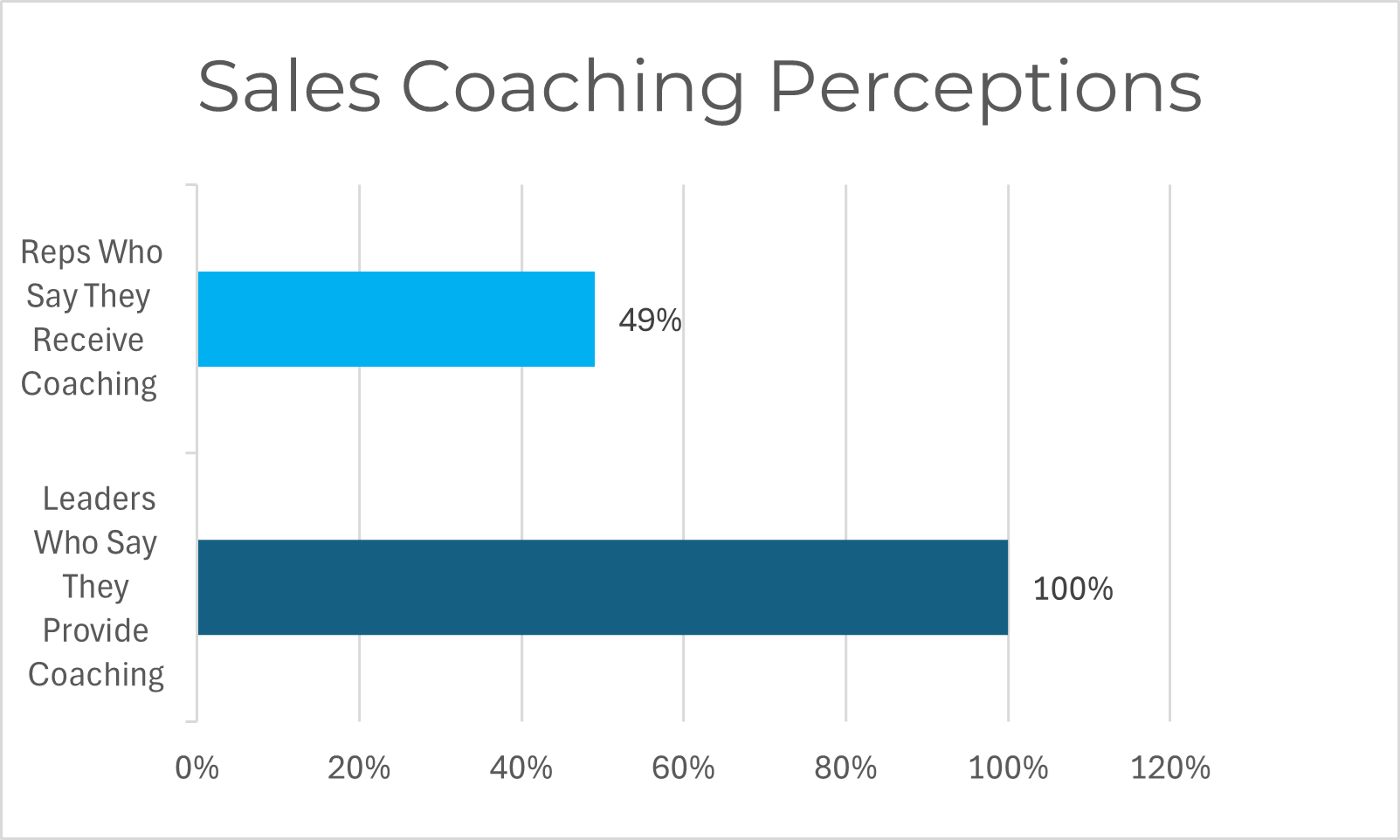
Despite 100% of managers indicating they provided coaching for their direct sales reports, less than half (49%) of sales representatives said their managers were directly involved in sales coaching. PDG’s 2024 State of coaching Report
Top performers reported receiving more coaching in understanding the market and competitors (61% vs. 39%) and customer relationship building (55% vs. 35%). PDG’s 2024 State of Coaching ReporT
Sales coaching provided by direct managers was linked to higher retention among representatives to remain with their current employers for the long term and a greater willingness to recommend their companies to others as a great place to work. PDG’s 2024 State of Coaching ReporT
In the world of sales, recognizing and understanding the differences between training and coaching is crucial. In Life Sciences sales, where the stakes are high and the environment is complex, the importance of coaching cannot be overstated. It goes beyond building a foundation, focusing on continuous improvement, adaptive strategies, and the refinement of skills. By embracing both training and coaching in a synergistic approach, Life Sciences companies can cultivate a sales force that excels in the intricacies of the industry, driving success in a highly competitive market.
New research, coaching practice, and launch capability thinking for life sciences commercial leaders. About once a month.
We use your email to send articles. Unsubscribe any time.